Ophthalmic or eye problems are relatively common in horses, and can range from mild irritation due to insects, allergens, and dust, to more serious issues like corneal ulceration, autoimmune diseases, uveitis (“moon blindness”) or trauma to the eyes, eyelid, or facial bones. Developmental or age-related change like cataracts that restrict vision can also affect a horse’s day to day behaviour.
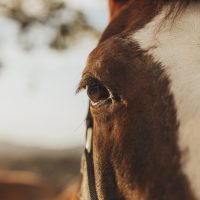
Common signs of eye problems include discharge from one or both eyes, squinting or holding an eye shut, swelling or redness of the eyelids, or a change in appearance to the eye itself, for example white or grey ‘cloudiness’ visible on the surface of the eye (cornea), as well as obvious trauma or wounds to the eyelids and face around the eye. Changes to behaviour or spookiness can also occur if vision is affected.
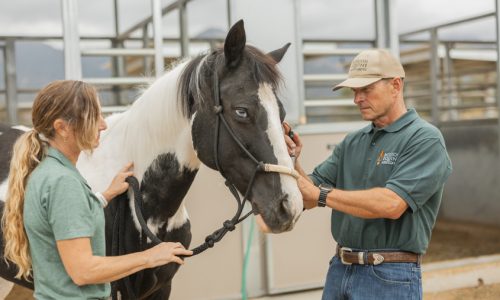
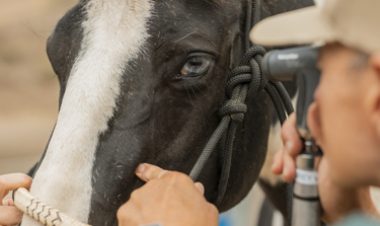
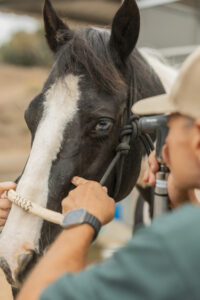
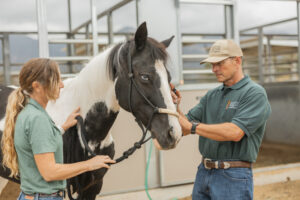
Many eye issues can be evaluated and treated by our vets at your farm. To evaluate an eye condition, we will perform an ophthalmic examination including tonometry, staining the surface of the cornea to evaluate it for damage, taking samples from the cornea, and vision tests as required. Treatment usually involves eye drops and systemic medications. We are also able to perform more specialised treatments such as intra-ocular injections for uveitis and placement of sub-palpebral lavage systems for horses that are difficult to medicate with drops or require intensive treatment.
Horses are prone to developing uveitis in response to inflammation or injury to the eye, regardless of the cause. Uveitis can also manifest as an auto-immune disorder in certain horses, including breeds like the Appaloosa. Uveitis is a serious condition that can result in long-term discomfort, damage to the eye and loss of vision. For this reason, we advise that eye abnormalities are evaluated promptly by one of our veterinarians.