Equine Exam Glossary
Neurologic Examinations: Physical examination that focuses on teasing out neurologic deficits. We will test for cranial nerves, sensory, pain, and proprioceptive deficits and come up with a plan for a specific diagnosis.
Gastrointestinal Examinations: In a GI exam, we start with evaluating clinical signs, physical exam, diet, and history to determine whether or not imaging, such as gastroscopy, is indicated. Gastroscopy is when we use a long camera that passes through the nose to the stomach to visualize and diagnose conditions involving the esophagus, stomach, pylorus, and proximal duodenum.
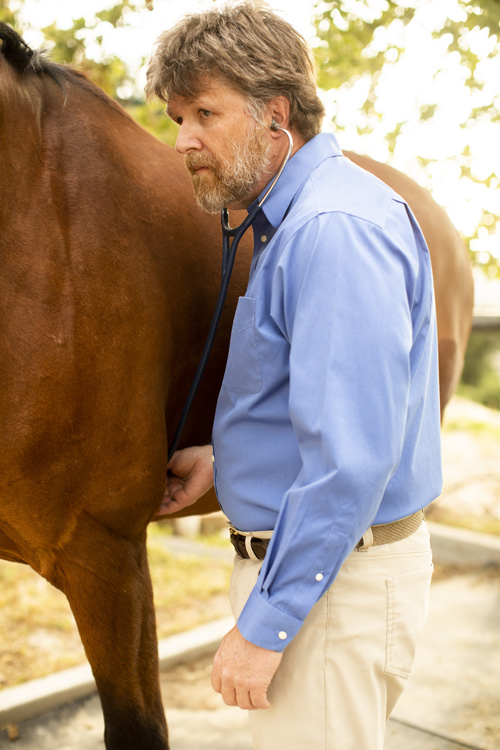
Cardiovascular Examinations: In a cardiovascular exam, we will evaluate your horse for a variety of conditions. Our most basic tool is to listen with a stethoscope to determine if there is a murmur (audible disruption of bloodflow) or if we suspect an arrhythmia (irregular heart beat). Some conditions are physiologic in horses but others require more advanced workup, like an echocardiogram and/or an electrocardiogram (ECG/EKG).
Respiratory Examinations: In a respiratory exam, we start with using clinical signs, history, physical exam, blood/fluid testing, and diagnostic imaging to determine a cause of respiratory conditions. We typically start auscultation to listen for airway disease and move to upper airway endoscopy, ultrasound, and more depending on where the initial exam leads us.