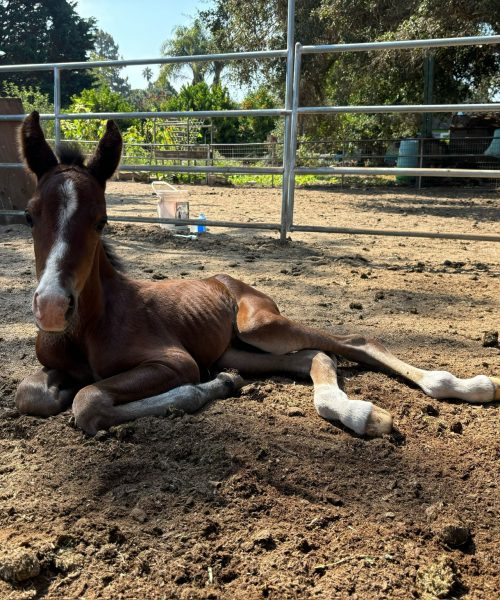
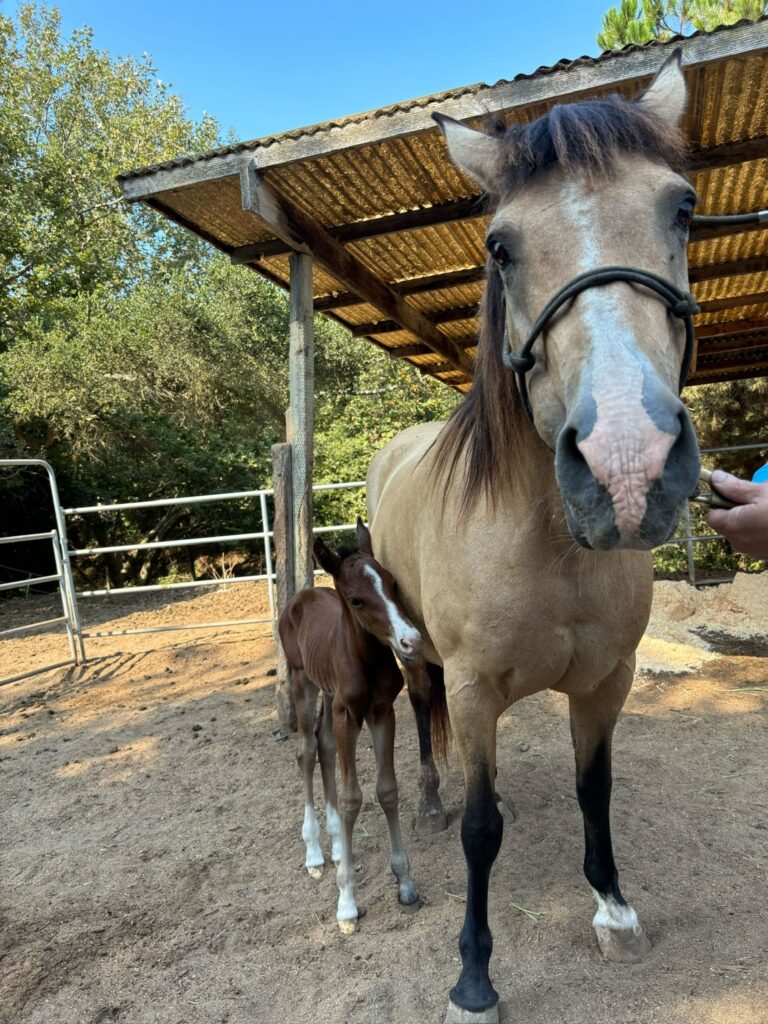
When a new foal is born, the first 24 hours are critical, and our team is here to ensure both mare and foal get the healthiest possible start.
We perform a full newborn physical exam to evaluate the foal’s heart and lungs, temperature, limb conformation, eyes, joints, umbilicus, and overall strength and behavior. We confirm that the foal is nursing well and has passed meconium, and we closely monitor for any early signs of weakness or illness. An essential part of newborn care is testing the foal’s IgG levels between 12–18 hours after birth to make sure they received adequate antibodies through the mare’s colostrum; if levels are low, we can administer hyperimmune plasma to protect the foal from infection.
At the same visit, we examine the mare to ensure she has passed her placenta completely, check for vulval tears, and that she is comfortable, eating, and recovering normally. We also like to evaluate the placenta itself, as it can offer important clues about the foaling process and the mare’s health.
Prior to foaling, mares should be vaccinated for Pneumabort-K (abortogenic equine herpes virus) at 5, 7, and 9 months of pregnancy to reduce the risk of abortion and at 2–4 weeks before their due date with flu/rhino and core vaccines to boost colostrum quality. We also recommend having a clean foaling environment prepared ahead of time.