Laminitis is inflammation of the laminae—the sensitive tissue that secures the coffin bone to the hoof wall—and requires prompt medical and mechanical management to prevent progression. Founder refers specifically to chronic or severe laminitis in which the coffin bone shifts, rotates, or sinks within the hoof capsule. Management focuses first on treating laminitis (pain control, cryotherapy, anti‑inflammatories), stabilizing the hoof (corrective trimming, therapeutic shoeing, supportive pads or cast boots), and addressing underlying causes such as insulin dysregulation or PPID. Dietary measures—low‑NSC hay, soaking hay and discarding the soak water to reduce sugars, limiting pasture access, and portioned feeding—plus soft, supportive footing and controlled exercise as tolerated are central to prevention and recovery. Medical therapies (e.g., pergolide for PPID or other veterinarian‑recommended drugs) and regular monitoring of body condition and insulin status (Insulinwise testing) guide long‑term care. Early intervention and coordinated farriery, nutrition, and veterinary management reduce the risk of progression to founder and improve outcomes.

Laminitis is inflammation of the laminae—the sensitive tissue that secures the coffin bone to the hoof wall—and requires prompt medical and mechanical management to prevent progression. Founder refers specifically to chronic or severe laminitis in which the coffin bone shifts, rotates, or sinks within the hoof capsule. Management focuses first on treating laminitis (pain control, cryotherapy, anti‑inflammatories), stabilizing the hoof (corrective trimming, therapeutic shoeing, supportive pads or cast boots), and addressing underlying causes such as insulin dysregulation or PPID. Dietary measures—low‑NSC hay, soaking hay and discarding the soak water to reduce sugars, limiting pasture access, and portioned feeding—plus soft, supportive footing and controlled exercise as tolerated are central to prevention and recovery. Medical therapies (e.g., pergolide for PPID or other veterinarian‑recommended drugs) and regular monitoring of body condition and insulin status (Insulinwise testing) guide long‑term care. Early intervention and coordinated farriery, nutrition, and veterinary management reduce the risk of progression to founder and improve outcomes.
Laminitis in horses results from the disruption of the normal blood supply to the laminae of the hoof. From a clinical perspective, this is one of the most common, yet potentially severe conditions that equine veterinarians face on a daily basis. Laminitis often culminates as a result of other disease processes in the horse. Some common causes of Laminitis include:
Early recognition and intervention are the key to having the best outcome in cases of laminitis. The goals of therapy are to treat and manage the primary problem while limiting the damage to the hoof. We feel that the use of aggressive early cryotherapy, supportive podiatric treatment and resolution of the primary problem to be key in the treatment of laminitis.
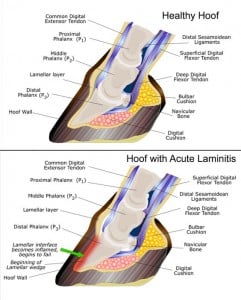
Laminitis is a disease that affects the feet of hooved animals (ungulates) and it is found mostly in horses and cattle. Clinical signs include foot tenderness progressing to inability to walk, increased digital pulses, and increased temperature in the hooves. Severe cases with outwardly visible clinical signs are known by the colloquial term founder, and progression of the disease may lead to perforation of the coffin bone through the sole of the hoof, requiring aggressive treatment or euthanasia.